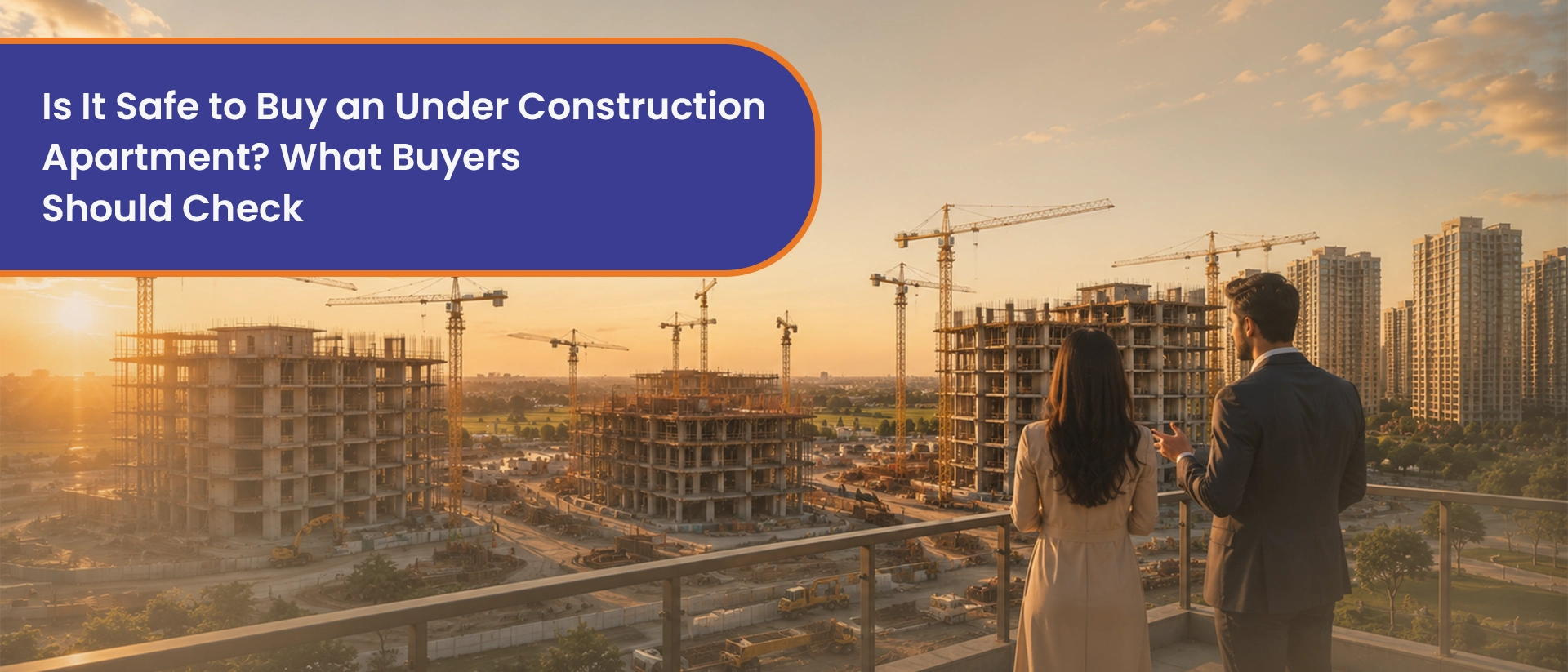
Is It Safe to Buy an Under Construction Apartment? What Buyers Should Check
Published On: 29th May 2026
Chennai’s under-construction housing market remained strong, with 61 new residential projects launched in Q1 2025 (Source: Indian Express)
Buying a home is often one of the biggest financial decisions we make in our lives, and the complexities increase when it comes to purchasing properties under construction. With the real estate market evolving, ensuring a secure investment has become imperative for buyers.
This blog provides a detailed answer on whether it is safe to buy an apartment under construction.
Advantages of Buying Under-Construction Flats
- Lower Purchase Price – Under-construction flats are often priced lower than ready-to-move homes.
- Flexible Payment Plans – Payments are usually linked to construction progress, making them easier to manage.
- Higher Appreciation Potential – Property value may increase by the time the project is completed.
- Modern Amenities – New projects typically offer updated facilities and contemporary designs.
- More Choice – Early buyers can choose their preferred floor, layout, and view.
- Customisation Options – Some builders allow changes to interiors or finishes during construction.
- Newer Construction Quality – Homes are built using the latest materials and construction standards.
- Better Investment Opportunity – Suitable for buyers looking for long-term capital growth.
What Are the Risks of Buying Under-Construction Flats?
Investing in an under-construction property can be welcoming, primarily due to lower prices compared to completed units. However, understanding the associated risks is essential. Here are some risks to consider:
- Delay in Completion: Construction delays are common, which can lead to extended periods before you can occupy the property.
- Financial Stability of Builders: There’s always a possibility that the builder might face financial issues and be unable to complete the project.
- Regulatory Challenges: Including potential changes in government policy that could impact construction timelines.
- Quality of Construction: Without a completed structure, assessing the quality can be challenging.
6 Things to Check Before Buying an Under-Construction Property
Before proceeding with the purchase of an under-construction flat in Chennai, consider these key aspects:
1. Reputation of the Builder
The reputation of the builder should be your first point of reference. Research their past projects, customer feedback, and how they handled previous construction timelines. Points to evaluate include:
- Previous project completion rates
- Customer reviews and testimonials
- Financial health and reputation in the industry
Looking for the most trusted home builder in Chennai? Checkout MP Developers.
2. Construction Approvals and Legal Standing
Ensure that all necessary construction approvals are in place. This includes:
- RERA Registration: Check if the project is registered under the Real Estate (Regulation and Development) Act, which is crucial for protecting buyers.
- Land Title: Verify that the builder possesses a clear title to the land and that it is free from encumbrances.
- Fines and Disputes: Look for any previous legal issues regarding the builder or the project.
Read more about the importance of RERA registration in Chennai
3. Financial Aspects
Understanding the financial viability of your investment is crucial:
- Be wary of discounts that seem too good to be true. A flat priced significantly below market value often raises red flags.
- Calculate the total cost of ownership, including possible increases in maintenance charges after possession.
- Assess potential financing options, and ensure that you are aware of loan eligibility and down payment requirements.
4. Quality of Construction
Before investing, ensure that you are comfortable with the construction quality:
- Engage a qualified real estate advisor or structural engineer who can assess the proposed design and materials used.
- Look into construction methods, the quality of materials used, and the proposed amenities.
5. Project Timeline and Delivery Date
While investing, discuss the timeline for completion with the builder. Delays in construction can lead to significant inconveniences:
- Ask for a detailed timeline and plan for how they will deal with potential setbacks.
- Ensure that there are penalty clauses in case of unnotified delays.
6. Conduct Comprehensive Research
Investing in under-construction properties requires rigorous research. Here are some steps to follow:
How to inspect an under-construction site?
- Visit the Site: Always visit the property site to get a real feel for the location, neighborhood, and amenities.
- Observe Surroundings: Assess the micro-location – how the area looks during different times of the day, proximity to schools, hospitals, and potential noise pollution from nearby activities.
- Speak to Neighbors: Ask locals about their experiences with the builders and the area. This can provide insights that may not be available in brochures or advertisements.
- Online Platforms: Use various real estate websites to gather information on properties and read reviews about builders.
- Virtual Tours: Many builders now offer virtual tours, giving you invaluable information about the property without having to be physically present.
- Data Analysis Tools: Utilize spreadsheets and applications that help analyze multiple properties and their pros and cons systematically. This will streamline decision-making and can help in comparing properties effectively.
8 Common Mistakes to Avoid When Buying an Under-Construction Property
- Ignoring GST Costs – Check the applicable GST before making your purchase.
- Not Confirming Amenity Handover – Ask when facilities like the clubhouse, gym, or park will be ready.
- Skipping Price Comparison – Compare under-construction prices with ready-to-move and resale properties.
- Not Planning Your Exit – Understand your resale or investment options before buying.
- Ignoring Payment Terms – Read the payment schedule and delay penalty clauses carefully.
- Overlooking Cancellation Rules – Know the refund and cancellation policy before signing.
- Not Asking About Customisation – Find out if you can make changes to the layout or interiors.
- Signing an EOI Without Understanding It – Read the terms of the Expression of Interest (EOI) before paying any amount.
Read in detail about GST on flat purchases in Chennai.
Do Banks Give Loan For An Under-Construction Property in Chennai?
Yes, banks do give home loans for under-construction properties in Chennai.
Unlike ready-to-move properties where the full loan is disbursed at once, under-construction loans are released in tranches (stages) linked to construction progress. The builder submits completion certificates, and the bank disburses accordingly.
Read more about the Home Loan Tax Benefits Under the New Regime 2026-27
1) How does the loan disbursement and repayment work for an under-construction property?
Banks fund 75 to 90% of the property’s value (depending on the loan amount). You pay the remaining 10 to 25% as your down payment. During construction, you pay only pre-EMI interest on the amount disbursed so far. Full EMI kicks in only after complete disbursement or possession, whichever comes first.
2) What Do Banks Check Before Approving a Loan for an Under-Construction Flat?
- The project must be TNRERA registered. This is non-negotiable for Chennai properties post-2017. Banks will ask for the RERA number.
- The builder’s track record matters. Banks like SBI, HDFC, and LIC Housing Finance maintain approved project lists; loans are much smoother if your project is already on their list.
- Your CIBIL score (ideally 750+), income stability, and existing obligations determine your eligibility.
3) Which banks actively lend for under-construction properties in Chennai
SBI, HDFC Bank, ICICI Bank, LIC Housing Finance, Bank of Baroda, and Axis Bank all have active home loan products for under-construction projects. SBI’s MaxGain and HDFC’s home saver products are particularly popular with buyers who want flexibility.
Conclusion
Purchasing an under-construction property can be a lucrative investment, provided you are well-informed and thorough in your approach.
Are you considering buying an under-construction property in Chennai? Contact MP Developers – A trusted home builders in Chennai with 14+ years of experience, delivering quality villas, apartments, and plots with a strong focus on timely delivery and customer satisfaction
FAQs
1. Can I sell a flat that is under construction?
Yes. You can sell an under-construction flat if the builder’s terms allow it and the required legal formalities are completed.
2. Can I get tax benefits for an under-construction property?
Yes. You can claim certain tax benefits, but some deductions are available only after you take possession of the property.
3. Who pays GST on an under-construction property?
The buyer pays the applicable GST when purchasing an under-construction property from the builder.
4. Do I need to pay TDS on an under-construction property?
Yes. If the property value is ₹50 lakh or more, the buyer must deduct TDS as per income tax rules.
5. Can I invest capital gains in an under-construction property?
Yes. You can claim capital gains tax benefits if you meet the conditions specified under the Income Tax Act.