

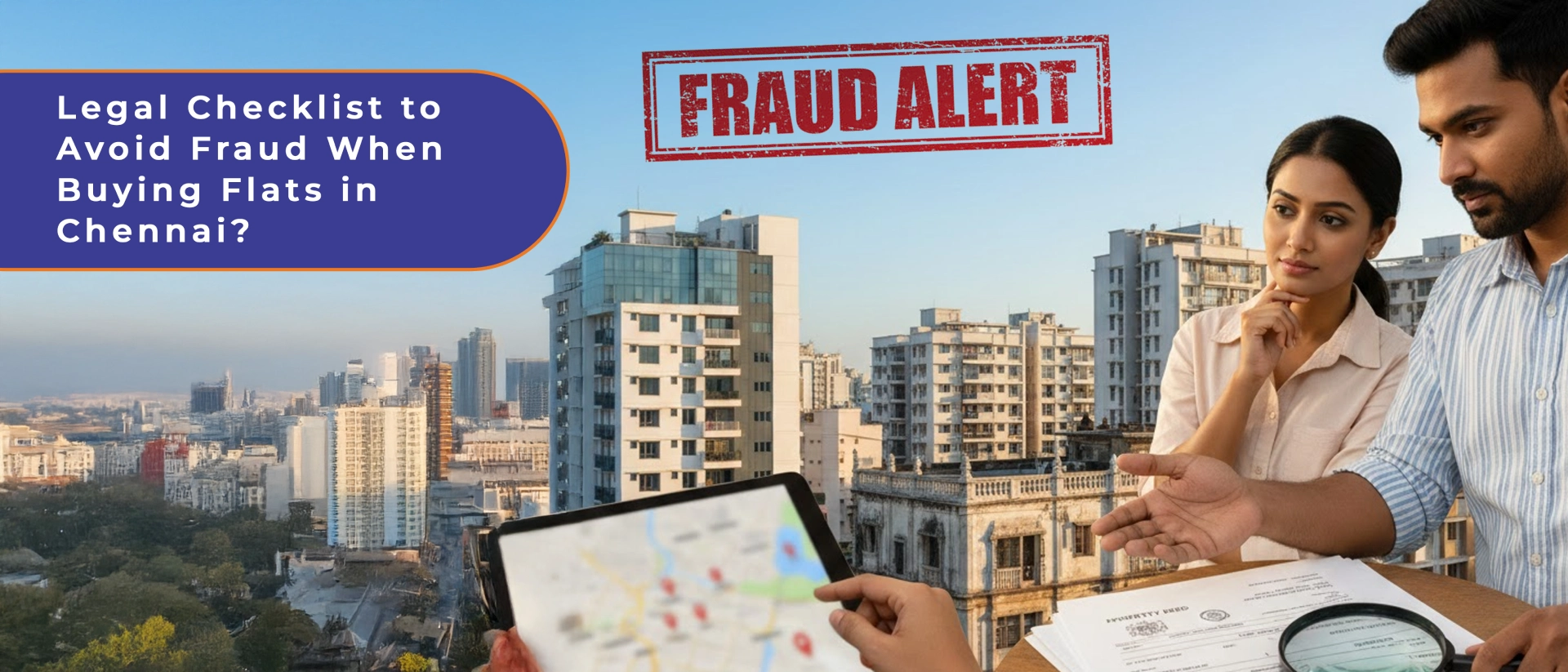
Legal Checklist to Avoid Fraud When Buying Flats in Chennai
Purchasing an apartment in Chennai is a dream for many families, and for the majority of people, it represents one of their largest financial responsibilities. But somehow, there is a genuine risk of falling for deceptive claims or fraudulent activities in a developing real estate market like Chennai; the necessity for safe and open real estate transactions is growing along with the demand for properties in Pallavaram and Chennai. Because homebuyers don’t know what to check before making an investment, many buyers end up in legal pitfalls.
A thorough legal checklist can protect you from fraud and other issues, whether you’re buying from a new builder or looking for a reputable builder like MP Developers.
Furthermore, this guide lists all the crucial legal documents you need to review before purchasing an apartment in Chennai.
Why legal verification matters
Over the past ten years, Chennai’s real estate market has expanded quickly, particularly in the areas like Pallavaram, Sholinganallur, Tambaram, and Guduvanchery. Growing demand increases the possibility of,
- Unauthorised construction
- False advertising
- Postponed acquisition
- False land titles
- Unlawful layouts
You can safeguard yourself against monetary loss, legal troubles, and psychological stress by following this legal checklist. Many reports have found that over 66% of civil cases in Indian courts are related to land and property disputes.
1.Title Deed Verification
This is the first and the most crucial document. The original title deed, which establishes who owns the ground on which the flat is being built.
Things to look for:
- The land must be in the builder’s name or properly jointly developed.
- There shouldn’t be any disagreements or legal claims in the title.
- Every prior transfer record needs to be continuous and evident and clear.
- Clean title documents are always provided without hesitation by a reputable company like MP Developers.
2.Mother Deed Review
The land’s ownership history over several decades can be traced in the Mother Deed. It assists you in verifying the integrity of the ownership chain.
Why it matters:
Helps,
- Stop buying land with unclear titles.
- Avoid buying problematic and disputed property.
- Guarantees the builder’s complete development rights.
Homebuyers can verify the mother’s deed with the sub-registrar’s office at all times.
3.Encumbrance Certificate
The Encumbrance Certificate indicates whether there are any liabilities, mortgages, or legal obligations associated with the land or property.
The EC protects you by:
- Verifying that the land is not pledged to a bank.
- Displays every transaction that has been registered.
- Guarantees the project’s safety for purchasers
To gain utmost benefit from the encumbrance certificate, ensure you have the EC of the past 20 or 30 years.
4.Confirmation of DTCP / CMDA Approval
The Chennai Metropolitan Development Authority (CMDA) or the Directorate of Town & Country Planning (DTCP) must approve any major residential project in Chennai. Ensure you get these documents approved before buying land or a flat in Chennai.
Why getting approval is crucial:
The document,
- Confirms the layout’s legality
- Guarantees adequate infrastructure and road access
- Protects you from fines or demolition notices
Always request CMDA or DTCP approval numbers when purchasing homes or apartments in Pallavaram.
5.Building Plan Approval Verification
Before getting into the process of developing the project/building, the builder must obtain approval for:
- Structure design
- Number of floors
- Parking plan
- Setback/breakout areas
- Amenities being provided
Signs of fraud to be considered:
- More storeys than authorised
- The authorised plan does not include the advertised facilities.
- Changes from the initial approval
Builders like MP Developers uphold complete openness for buyers and adhere to all approval standards.
6.Completion of RERA Registration
Before promoting or starting to sell units, all new construction projects are required to register under the Real Estate Regulation and Development Act (RERA).
How can RERA help?
- Protects you against possession delays
- Guarantees price and specification transparency
- Provides access to the builder’s background, approvals, and project specifics.
- Never invest in a project that is not RERA-registered to prevent fraud.
Note that, according to reports, over 124,900 home-buyer complaints have been resolved by state RERA authorities by mid-2024
7.Builder-Buyer Contract Inspection
The next step after deciding to reserve a flat is to sign the sale agreement.
What to know further:
- Precise flat dimensions
- Schedule of payments
- Date of completion and possession
- Penalties for postponement
- Terms of cancellation
- Construction warranty
Every provision will be explained in detail by a transparent constructor. Best builders in Chennai, like MP Developers, stand out in this particular location.
8.Completion Certificate Requisition
When the construction is fully completed or ready for occupancy, request the Completion Certificate (CC) from the local government authorities.
Why a completion certificate is important:
A completion certificate,
- Verifies that construction adhered to authorised plans
- Ensures the building is safe and legally completed
Buying an apartment without a completion certificate is dangerous and may result in problems with the financing and registration.
9.Occupancy Certificate
Following the final inspection, an Occupancy Certificate certifying that the building is safe to occupy is issued.
Without an occupancy certificate,
- You can experience problems with your water or EB connection.
- You are not permitted to occupy the flat.
- Home loans may be denied by banks.
- Prior to taking possession, always demand OC to avoid complications.
10.Legal Utility Approval
Make sure the building has the required approvals before purchasing your flat.
Check if there is
- Good water connection
- Uninterrupted Power
- Sewage and drainage systems work well
- Access to road and transport
- Safety from fire (for larger buildings)
High fines and unforeseen costs may result from missing utility approvals.
11.Recent Tax Receipts
Before receiving the property or flat in hand, make sure to verify that all taxes associated with:
- Property
- Land
- Fees for approval
- Fees for development
are updated and properly compensated.
This helps in
- Unexpected fees payment
- Legal issues that arise during a move
- Penalty payments in the future
12.Builder’s Reputation Verification
Selecting a reputable, trustworthy real estate developer in Chennai is one of the simplest strategies to prevent fraud. And builders like MP developers guide you throughout the process.
Before choosing a builder, verify:
- Timelines for previous project deliveries
- Evaluations and rankings
- Record of RERA compliance
- Construction quality
- Client endorsements
A secure and reliable home-buying experience is guaranteed by builders like MP Developers, who are renowned for their successful projects and client openness.
Buying an apartment is a decision that will change your life, not just a real estate exhibition. You can protect your family’s future, protect your investment, and be distant from the typical dangers that many buyers encounter. When you have a qualified legal verification process,
Whether you’re looking for apartments for sale in Pallavaram, Chennai, or comparing builders, be sure the project is:
- RERA-registered
- CMDA/DTCP-approved
- Backed by spotless legal documents
- Delivered by reliable builders
Selecting a reputable builder in Chennai like MP Developers is one of the best choices you can make if you want a secure, open, and trustworthy home-buying experience.
Frequently Asked Questions(FAQ)
1.What documents should I check before buying a flat in Chennai?
You must verify the title deed, mother deed, encumbrance certificate, CMDA/DTCP approval, RERA registration, building plan approval, sale agreement, completion certificate, occupancy certificate, and latest tax receipts.
2.How to know if flats in Chennai are legally approved?
You can know if a flat in Chennai is legally approved by checking for CMDA/DTCP approval, RERA registration number, and confirmed building plan approvals from local authorities.
3.Is RERA mandatory for flats in Chennai?
Yes. Every residential project must be registered under RERA. You can verify the registration on the official Tamil Nadu RERA website. https://rera.tn.gov.in/
4.How to know if a builder in Chennai is trustworthy?
To know if a builder is really trustworthy, look at their past project track record, timely delivery, customer reviews, RERA compliance, and transparency in documentation. Reputable developers like MP Developers provide all documents proactively.
5.What is an encumbrance certificate? Is it really important?
The EC shows whether the property has existing loans, mortgages, or legal disputes. Yes, the EC is important because it helps ensure the land is fully clear and safe to purchase.
6.How to verify the title deed of a flat in Chennai?
Request the original title deed and cross-check ownership details at the Sub-Registrar’s office to confirm authenticity.
7.Can I buy a flat in Chennai without CMDA or DTCP approval?
No. Such properties may face demolition risks, loan rejection, penalties, and legal complications. Always choose CMDA/DTCP-approved flats.
8.Can I get a home loan for the flat with no proper approvals?
Banks usually reject loans for properties without CMDA/DTCP approval, RERA registration, or clear title documents.
9.What is the difference between completion and occupancy certificates?
A Completion Certificate confirms the building is constructed as per approved plans. An Occupancy Certificate confirms the building is safe for living and ready for possession.
10.How to avoid frauds while buying flats in Chennai?
Typical frauds include selling unapproved flats, fake promises on amenities, illegal floor additions, misleading carpet areas, and selling without proper title documents.














 Home
Home
 Menu
Menu


 WhatsApp
 Enquire